
Christmas cooking FAQs from Miele
With Christmas around the corner, Miele GB’s Culinary Manager and Chef, Cesar Fernandez answers some of the most frequently asked Christmas cooking questions, as well as sharing his top clean up tips for the hosting season…
How to defrost the turkey
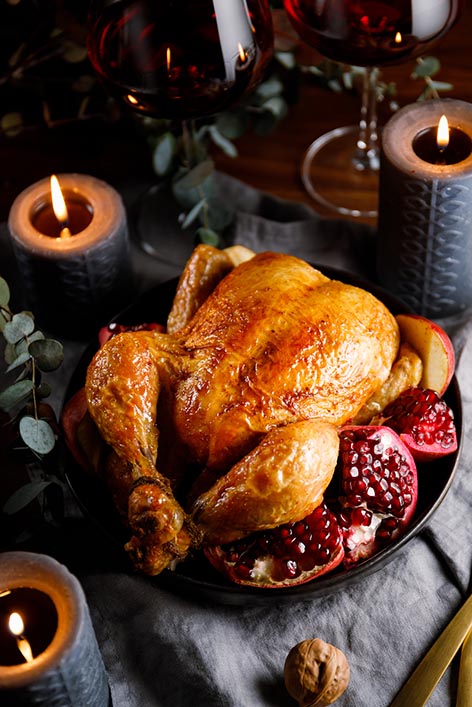
“The size of the turkey will determine how long it takes to defrost. Check the instructions on the packaging but as a guide, it’s 10 hours per kg in a fridge set to 4˚C. Never defrost at room temperature, as this encourages bacteria.”
How long will turkey last in the fridge?
“Whether fresh or defrosted, uncooked turkey will keep in the fridge for up to three days. Make sure it’s on a tray to catch the juices and place on the bottom shelf to prevent it dripping onto food below. Cooked turkey lasts about three to four days in the fridge, perfect for Boxing Day cold cuts or a turkey pie or curry.”
How to season the turkey
“Butter flavoured with garlic, lemon zest or fresh herbs makes a great rub before roasting. Alternatively, make a brine with salt, brown sugar, black pepper and thyme then spread over the turkey up to two days in advance.”
How to cook the turkey
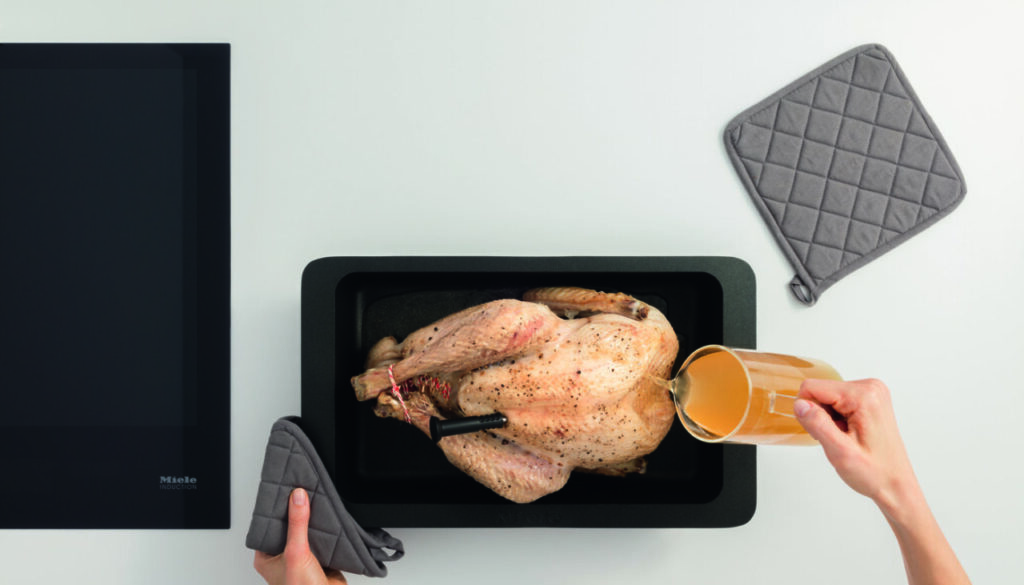
“I always dry brine mine the night before by rubbing with a mix of salt, sugar, black pepper and thyme, leaving it uncovered in the fridge overnight. This ensures it is fully seasoned with an extra crispy skin. A Miele Combination Steam Oven with a Food Probe is my go-to appliance, as the probe ensures the turkey will be cooked to exactly 72˚C – the ideal temperature. Combination steam ovens combine hot air and humidity, which makes the heat travel faster for shorter cooking times, even browning and the best results. A 6kg turkey for instance, cooks in just over two hours in a combi steam oven.”
Any ideas for a festive alternative to turkey?
“Whole fish is a great alternative. A whole roasted turbot with buttery new potatoes and lots of lemon is ideal.”
And for vegetarians?
“A great main alternative to meat is a cauliflower, leek, caramelised shallot and truffle gratin, which can be made up to 48 hours in advance.”
How to cook perfect roast potatoes
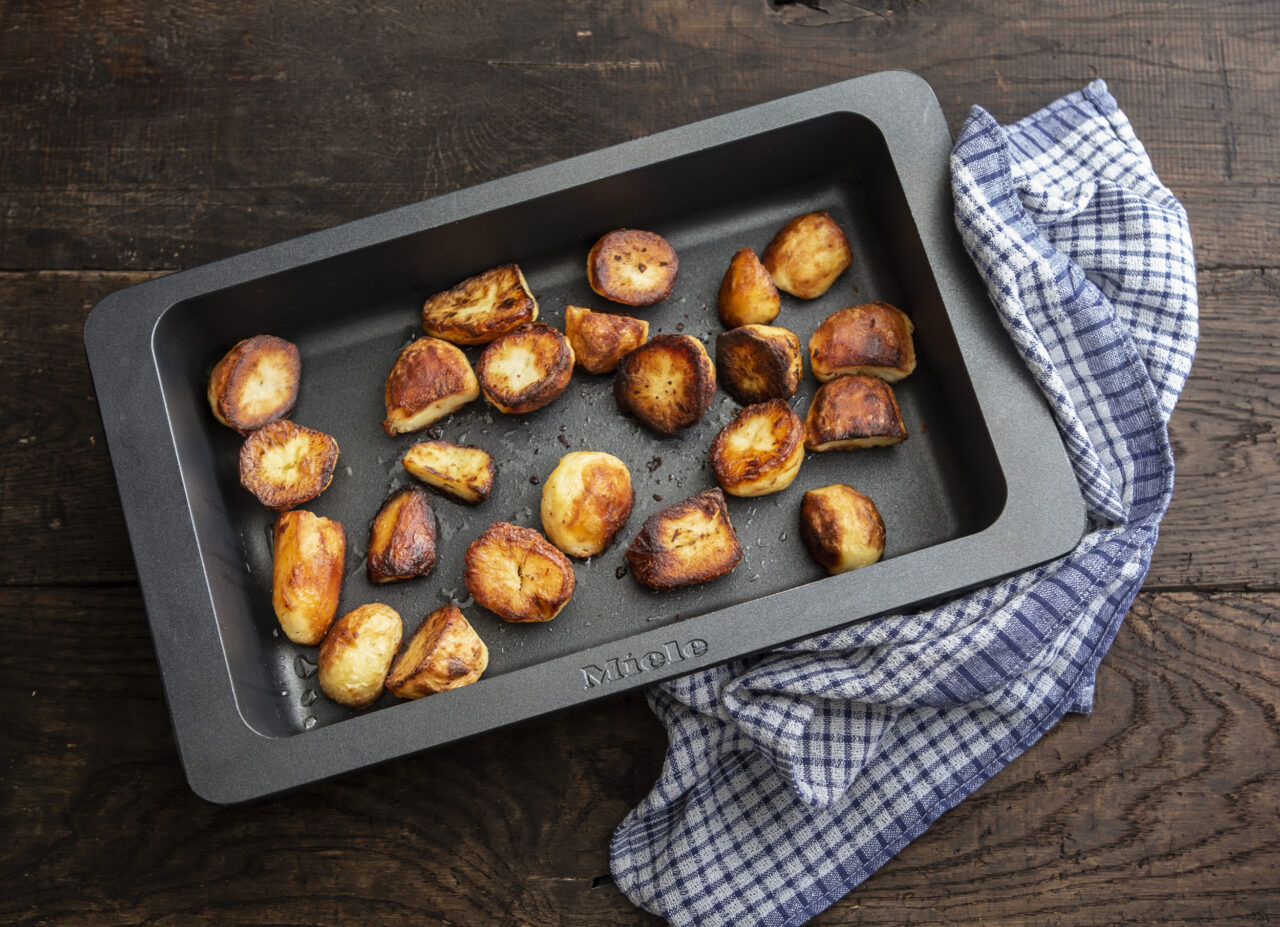
“In a Steam Oven or on the hob, par steam rather than boil the potatoes for a really fluffy inside. Place on a perforated steam container and cook for 10 minutes at 100˚C. This can be done up to 48 hours ahead – just store in an airtight or vacuum sealable container in the fridge. Then, activate the crisp function when roasting to expel moisture and give the perfect crispy finish.”
Which vegetables can be prepared or cooked in advance?
“Root vegetables such as carrots, parsnips and potatoes can all be par steamed ahead of the big day and stored in an airtight container in the fridge. Our gourmet box set is ideal for this, as they can also be used for par steaming, seasoning and cooking. When it comes to the big day, simply steam for an extra two minutes before serving or roast for 25 to 30 minutes with some honey and mustard.”
What’s the secret to a perfect Yorkshire Pudding?
“Don’t overmix the batter! Allow it to rest for 30 minutes before baking and if possible, use a steam oven to add one burst of steam as soon as they go into the oven.”
And brussels sprouts?
“Prepare in advance to save time on Christmas Day then roast for 25 to 30 minutes until charred all over on the day itself. If there’s no room in the oven, pan fry with a little olive oil and butter, adding bits of bacon for saltiness.”
How to make the best gravy
“Whether using meat stock or a good quality shop-bought stock, boost the flavour by simmering it with the giblets or turkey neck. My secret weapon is to add a little black treacle to help with the body and colour – trust me, it works!”
And any suggestions for dessert?
“A Christmas pavlova or roulade can be made in advance and easily assembled just before serving, and they look stunning in the centre of the festive table.”

How to load the dishwasher effectively
“Christmas and Boxing Day usually mean an endless cycle of dishwashing, so make sure it’s loaded effectively to not only clean crockery, cutlery and cookware properly but also to get as much in one load as possible without compromising on the results. Plates should be facing the centre in the slots on the bottom rack and never over-filled. Cups, glasses and bowls should be on the top rack at an angle facing downwards for best results when cleaning, draining and drying. Plastic items and Tupperware should always be on the top rack, as they can get too hot if placed on the bottom. Pots and pans should be face down on the bottom section and cutlery should be handle down in the cutlery basket while sharp knives must be sharp side down or laid flat on a cutlery tray. Never overload the dishwasher, make sure the spray arms are free to move and wash baking trays in the sink.”
How to avoid cloudy glassware
“Always use lower temperatures, a specialist glasses programme or Miele’s Gentle cycle. Make use of FlexLine baskets for careful loading and keep the salt and rinse aid topped up – neither too much nor too little. If rinse aid runs out on Christmas Day, use white vinegar instead.”
For further information please visit www.miele.co.uk
